Loading...
CTIHS

Department of Humanities and Social Sciences

About Department

Humanities
The Humanities Department explores the rich tapestry of human culture, thought, and expression. It encompasses disciplines such as literature, philosophy, history, languages, and the arts, encouraging critical thinking, creativity, and a deeper understanding of human experience. By studying the humanities, students gain insight into diverse cultures, ethical questions, and the forces that shape our world. The Bachelor of Arts Program prepares students to address and master the challenges of a rapidly changing and increasingly complex world. A flexible, broad-based curriculum permits students to choose courses and tracks of study reflecting their individual interests and varied career objectives. The curriculum offers intensive work and a degree of disciplined mastery in a major area. It also provides breadth and venturesome possibilities in communications, corporate systems, information technology, Humanities and social sciences.

Mass Communication
Department of Journalism & Mass Communication help students to be excellent in the field of media and writing by providing them academic education as well as practical exposure. Three year undergraduate degree program will help them to be sharp in practices and confident to choose their field of interest. It provides students technical skills and social understanding which able them to write about and convey information to the general public about business, history, culture, budget issues, governmental matters, entertainment, and sports via mass communication channels such as television, radio, and web-based social networks. Because the discipline of journalism is founded on truth, autonomy, and transparency, the course gives comprehensive knowledge at both the theoretical and practical levels.

Vision & Mission of the Department

Humanities Vision

The Faculty of Humanities and Social Sciences aims for Academic and Professional Excellence in the area of Social Sciences and Languages along with holistic development of students. It intends to provide value-based education and quality research with total commitment and interdisciplinary approaches so that it can produce socially responsible citizens.

Humanities Mission

- To develop an advanced comprehensive talent in Humanities and Social Sciences students through Innovative and Sustainable academic programmes.
-To equip individuals with a contemporary set of skills to deal effectively with life and to nurture our students to understand nature and needs of life..
-To motivate learners in realization and actualization of his/her genuine capabilities so that they can be important contributors to a larger institutional mission.
To encourage research-based approaches and analytical mindset in the area of Languages and social sciences subjects.

Mass Communication Vision

The Faculty of Humanities and Social Sciences aims for Academic and Professional Excellence in the area of Social Sciences and Languages along with holistic development of students. It intends to provide value-based education and quality research with total commitment and interdisciplinary approaches so that it can produce socially responsible citizens.

Mass Communication Mission

- Help students to understand their potential and self-worth so that they grow as leaders and transforming agents who make a remarkable contribution in all spheres of national and global life.
-In the emerging knowledge society, cultivate a community of learners driven by a desire for academic success.
-Equip our students with latest technological and soft skills as well as other learning resources available, in order to give them self-assurance to handle the new demands of a world that is more digitalized.

HOD's Desk


Humanities
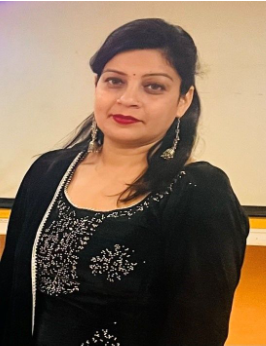
Our department is an abode of excellence in the field of human culture. Bachelor of Arts (BA) provides a wide spectrum of subjects from which you will acquire core skills to enhance any career of your choice. This degree fuels an individual’s imagination and broadens mind, which is key for innovation and thinking beyond ordinary. Our students gain the knowledge, skills and world-class connections which they need to succeed in a wide range of careers or further studies. We take pride in cultivating the next generation of thoughtful, empathetic and effective citizens. They learn qualities of being great leaders who will make world a better – and brighter – place. Our undergraduate program has been designed to equip our learners with critical discernment, information literacy, theoretical knowledge, and other relevant skills in our rapidly evolving globalized societies to develop an understanding of current and historical issues. Committed to the principles of equity, diversity and inclusion, the department is home to highly accomplished faculty with robust and innovative research and teaching portfolios to make our learners’ journeys rich, meaningful, and memorable. With so many options and opportunities, we ensure that you will find your place within our humanities program. Join us!!!!! Thank you for this opportunity and responsibility to guide your educational journey.
Happy learning!!

Ms. Ratika Relan (HOD)


Mass Communication

The goal of our department is to provide practical learning as well as academic studies to our students that help them to be a professional in their fields. We provide hand on practice on each and every equipment with brief knowledge related to its subject. There are various activities organized by our department to boost self-confidence and enhance caliber to perform in front line in all students. We regularly organize field visits to different media places time on time.
Mr. Koshal Gautam

Subjects Offered

S. No. Subjects
1. English (Compulsory)
2. Punjabi / Basic Punjabi / Punjabi History & Culture (Compulsory)

Learning Process & Methodology

Humanities

1. Lecture-Based Learning
- Core concepts are delivered through structured classroom lectures.
-Focuses on theory, foundational knowledge, and critical perspectives.
2. Interactive Discussions
- Seminars, group discussions, and debates encourage critical thinking and collaborative learning.
- Promotes deeper understanding and analysis of topics.
3. Project-Based Learning
- Students undertake individual or group projects (e.g., research papers, media reports, creative writing).
- Encourages independent inquiry, problem-solving, and creativity.
4. Workshops and Guest Lectures
- Industry professionals and academic experts provide insights beyond textbooks.
- Keeps students updated with current trends and practices.
5. Use of Multimedia and ICT Tools
- Learning supported by audiovisual materials, digital media, e-learning platforms, and labs.
- Enhances engagement and accessibility of content.
6. Continuous Assessment
- Learning is reinforced through regular assignments, presentations, and internal tests.
- Provides timely feedback and encourages consistent effort.
7. Research and Analytical Training
- Students are trained in basic research methods, critical reading, and academic writing.
- Important for higher studies and professional roles.

Mass Communication

Department provides quality education to the students which includes Lectures, Case Studies, tutorials as well as hands on practice for soft skills. The Institute provides an excellent academic environment with focus on self- learning. The teaching and learning methodologies follow a rigorous regime that involves intensive and extensive working on challenging academic tasks. The teaching is emphasized through student centered and discovery method of learning in place of the conventional teacher centered learning. Peer to Peer learning is encouraged. Exposure to state- of- the –art infrastructure, technology, professional and field experiences are brought to students through visiting faculties from various Industry and Mentoring exercises. Interactive Teaching methods (use of internet, CDs, Projectors, Power point presentation) by the faculties help the students in better understanding of the topics. ICT enabled teaching helps both slow and advanced learners. Students are encouraged to participate in competitions like quiz, debates, elocution; versification etc. at various levels. We provide quality education to students through class room teaching, career counseling, Personality Development and Spoken English Programs and make them able to compete in the job market. At the end of each period students are allowed to individually meet the teacher in order to resolve doubts on topics taught in a class room. Faculty Members are encouraged to organize departmental seminars and workshops with active involvement of students facilitating collaborative and independent learning among students.

Assessment is based on
1. Theory Examinations
- Conducted at the end of each semester.
- Cover core subjects like media law, journalism ethics, mass communication theories, etc.1. Theory Examinations
- Conducted at the end of each semester.
- Cover core subjects like media law, journalism ethics, mass communication
2. Internal Assessment
- Includes class tests, assignments, quizzes, and attendance.
3. Practical Evaluation
- Includes lab work in photography, video production, editing, radio broadcasting, etc.
- Hands-on assessments based on project quality, creativity, and technical skills.
4. Project Work / Field Assignments
- Students complete individual or group projects (e.g., documentary, magazine layout, newsroom simulation).
- Often evaluated through viva and report submissions.
5. Seminars / Presentations
- Students present research topics or media projects.
- Helps assess communication and analytical skills.
2. Internal Assessment
- Includes class tests, assignments, quizzes, and attendance.
3. Practical Evaluation
- Includes lab work in photography, video production, editing, radio broadcasting, etc.
- Hands-on assessments based on project quality, creativity, and technical skills.
4. Project Work / Field Assignments
- Students complete individual or group projects (e.g., documentary, magazine layout, newsroom simulation).
- Often evaluated through viva and report submissions.
5. Seminars / Presentations
- Students present research topics or media projects.
- Helps assess communication and analytical skills.

Laboratories

Machine Learning Lab
Journalism and Mass Communication Lab

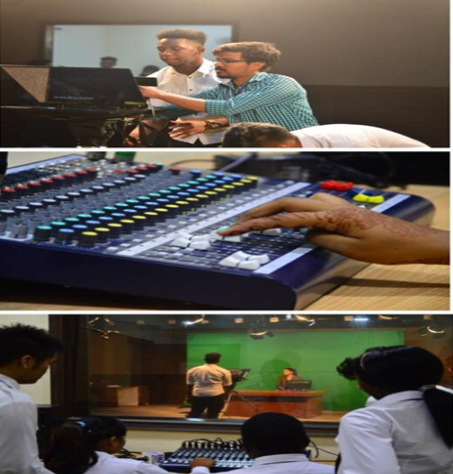
The Journalism and Mass Communication Lab is equipped with the audio and video production equipment such as camera, basic lights, console, Microphones etc. It is maintained on industry standards. Students are working on these equipments to practice different journalism related activities like anchoring, news reading, photography, editing etc. Students also make documentaries with the help of these equipments and editing process is done in studio.